

Alexa vs Google Home: Best Smart Air Purifiers That Work with Voice Control
January 23, 2026 | by pardudanny
Introduction to Smart Air Purifiers
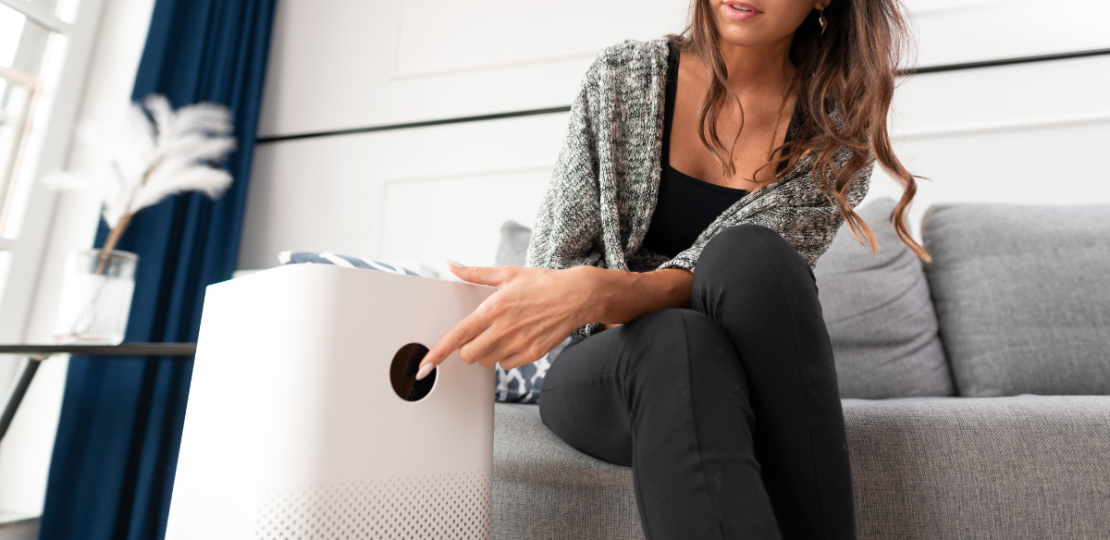
Smart air purifiers have emerged as an innovative solution to maintaining indoor air quality in an increasingly polluted world. These devices are designed to filter and clean the air within homes and offices, removing allergens, dust, and harmful pollutants. With the integration of advanced technology, smart air purifiers allow users to monitor and control air quality remotely, thereby enhancing user experience and convenience.
The growing popularity of smart air purifiers can be attributed to the increasing awareness of the health impacts associated with poor air quality. As concerns surrounding respiratory diseases escalate, more people are turning to air purification systems to safeguard their health. Additionally, the integration of these purifiers with smart home ecosystems, particularly platforms like Alexa and Google Home, has further contributed to their appeal. Such compatibility enables users to manage their devices using simple voice commands, streamlining the process of maintaining a healthy living environment.
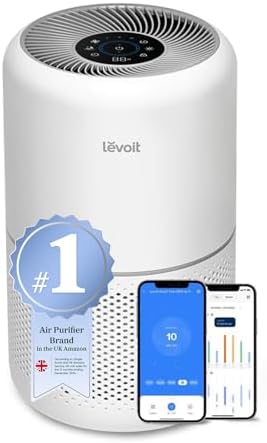
- 【𝐔𝐩𝐠𝐫𝐚𝐝𝐞𝐝 𝐕𝐞𝐫𝐬𝐢𝐨𝐧 𝐰𝐢𝐭𝐡 𝐒𝐭𝐫𝐨𝐧𝐠𝐞𝐫 𝐀𝐢𝐫 𝐏𝐮𝐫𝐢𝐟𝐢𝐜𝐚𝐭𝐢𝐨𝐧】The Upgraded Core 300S New HEPA Air Purifier features a denser filter a…
- 【𝐇𝐢𝐠𝐡-𝐩𝐫𝐞𝐜𝐢𝐬𝐢𝐨𝐧 𝐋𝐚𝐬𝐞𝐫 𝐀𝐢𝐫 𝐐𝐮𝐚𝐥𝐢𝐭𝐲 𝐒𝐞𝐧𝐬𝐨𝐫】 Only 20% of air purifiers on the market are equipped with a laser sensor and t…
- 【𝐈𝐧𝐭𝐮𝐢𝐭𝐢𝐯𝐞 𝐀𝐢𝐫 𝐐𝐮𝐚𝐥𝐢𝐭𝐲 𝐃𝐢𝐬𝐩𝐥𝐚𝐲】 Your concerned PM2.5 (≥0.3um) will be displayed on our smart VeSync APP and the air qual…
One of the notable benefits of having voice control capabilities in air purifiers is the ease of access. Users can adjust settings, check air quality levels, or turn devices on and off without lifting a finger, which is particularly advantageous when multitasking or for individuals with mobility constraints. This hands-free operation not only enhances convenience but also encourages consistent monitoring of air quality, leading to better health outcomes.
As we delve further into the realm of smart air purifiers, we will explore specific models that integrate seamlessly with smart home systems and evaluate their features and effectiveness. It is essential to understand how these devices function in tandem with other smart technologies to create a healthy and efficient living space.

- 【#𝟭 𝗔𝗶𝗿 𝗣𝘂𝗿𝗶𝗳𝗶𝗲𝗿 𝗕𝗿𝗮𝗻𝗱】: Levoit has sold over 6.5 million products worldwide, available in 35 countries and regions, and…
- 【𝟑 𝐋𝐚𝐲𝐞𝐫 𝐇𝐞𝐩𝐚 𝐅𝐢𝐥𝐭𝐞𝐫】: The three-layer Hepa filter removes most pollutants like dust, pet dander, pollen, smoke, odors, …
- 【𝐂𝐨𝐯𝐞𝐫 𝟑𝟒㎡ 𝐑𝐨𝐨𝐦 𝐎𝐧𝐜𝐞 𝐚𝐧 𝐇𝐨𝐮𝐫】: The CoreMini uses 360° HEPA technology and three-stage filtration to quickly purify 34 sq…
Understanding Voice Control Technology
Voice control technology has emerged as a cornerstone of modern smart home devices, particularly in systems powered by platforms such as Alexa and Google Home. At its core, voice recognition involves the translation of spoken language into text that machines can understand and act upon. This process involves several key components, including speech recognition algorithms, natural language processing (NLP), and machine learning techniques.
When a user issues a voice command, the device captures the audio input and employs sophisticated algorithms to identify the words spoken. Following this, natural language processing is utilized to interpret the context and meaning of the command, allowing the system to execute the appropriate action, whether it’s adjusting the air purifier settings or providing information on air quality. The accuracy of this voice recognition technology continues to improve, making interactions more intuitive for users.
Furthermore, the importance of smart home ecosystems cannot be overstated. Devices compatible with Alexa and Google Home are integral components of these ecosystems, forming a network that enhances user experience through seamless connectivity. For instance, users can control multiple devices—such as smart air purifiers, lights, and thermostats—using a single voice prompt, maximizing efficiency and convenience. This interoperability not only simplifies tasks but also allows users to create personalized environments tailored to their preferences.
In addition to convenience, the use of voice control technology provides greater accessibility to smart home features, benefiting individuals with mobility challenges or those who prefer hands-free interactions. As the technology evolves, the potential applications will likely expand, driving further integration of voice control within everyday life.

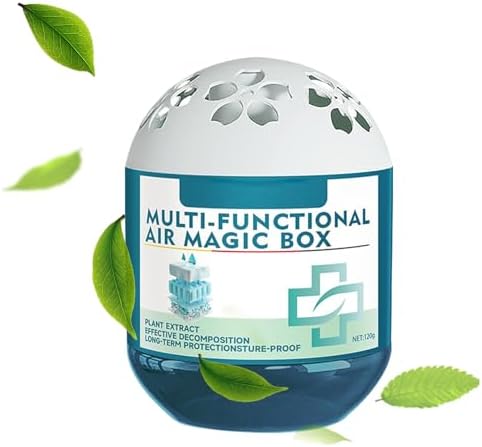
- Experience the Breath of Fresh Air: Our air purifiers for home is equipped with a cutting-edge original filter designed …
- In 22dB Serenity: The air purifier not only cleans your air but also enhances your room’s ambiance with a built-in blue …
- Invigorate Your Space with Scents: Experience the luxury of fresh and fragrant air right. Simply add 4-5 drops of your f…
Top Features to Look for in Smart Air Purifiers
When selecting a smart air purifier, several essential features warrant consideration to ensure an optimal choice that meets specific needs. One of the primary features to evaluate is the inclusion of HEPA filters. High-Efficiency Particulate Air (HEPA) filters are renowned for their ability to capture a high percentage of airborne particles, including allergens, dust, and even certain pathogens, making them a crucial component for anyone looking to enhance indoor air quality.
The Clean Air Delivery Rate (CADR) rating is another critical aspect to examine. This metric indicates the efficiency of the air purifier in removing pollutants from the air in a specific time frame. A higher CADR suggests that the device can clean the air in a room more quickly, which is particularly valuable in areas with higher pollution levels or allergy-inducing particles.
Noise levels are equally important, especially for consumers who may use air purifiers in bedrooms or workspaces. A smart air purifier should ideally operate quietly while still delivering effective filtration. Selecting a model designed for low operational noise ensures minimal disruption in daily activities.
Connectivity options enhance the versatility of smart air purifiers. Models that feature app connectivity allow users to monitor air quality, adjust settings, and receive notifications directly from their mobile devices. This functionality greatly enhances user experience and control over the air quality in their environment.

- 3-in-1 Filter: Features a 3-in-1 filter (pre-filter, HEPA filter layer, activated carbon filter), an automatic mode that…
- Simply Clean Air: Filters of dust, pollen, cigarette smoke, odors, mold spores, and pet dander. Filters particles as sma…
- Monitors Air Quality: Intelligent monitors PM2.5 and automatically reacts to changes in the environment, adjusting the c…
Scheduling functionalities enable users to set operation times for the air purifier based on activities or specific times of day, offering convenience and energy savings. Finally, it is vital to consider compatibility with various smart home systems, including Google Home and Amazon Alexa, allowing for integration into existing smart home configurations, facilitating voice control access for added convenience.
Comparison of Alexa and Google Home Compatibility
When selecting a smart air purifier, understanding the compatibility with voice assistants like Alexa and Google Home is crucial for seamless integration into your smart home ecosystem. Both Amazon Alexa and Google Home offer unique advantages when controlling various smart devices, including air purifiers.
Many air purifier brands have committed to integrating their products with both systems, but there are instances where specific models are optimized for one voice assistant over the other. For example, the Dyson Pure Cool Link air purifier is highly compatible with Alexa, enabling users to control settings through voice commands effortlessly. Conversely, certain models from Levoit, such as the Core 300, are noted for their compatibility with Google Home, providing equally impressive voice control features.
One of the notable advantages of Alexa is its ability to integrate with a broader range of smart home devices due to the extensive third-party support provided by various manufacturers. This might simplify control if you have multiple Alexa-compatible devices. Users can create routines and customize settings, offering a profoundly integrated experience across their smart home.
On the other hand, Google Home shines in providing excellent contextual understanding and direct responses to queries, which can enhance user interaction with their air purifiers. Users can ask about air quality levels or receive maintenance reminders with greater clarity. However, it is essential to note that there may be fewer air purifier options that are exclusively compatible with Google Home compared to Alexa.
Ultimately, the choice between Alexa and Google Home compatibility with air purifiers depends on the individual’s preference for existing smart devices and the specific functionalities they desire in voice control capability. Each system has its unique strengths, and understanding these will ensure users can select the most suitable air purifier for their needs.
Best Smart Air Purifiers Compatible with Alexa
In the realm of smart home devices, ensuring clean and healthy air has become a priority for many homeowners. Smart air purifiers that seamlessly integrate with virtual assistants like Alexa provide not only convenience but also enhanced air quality management. Below is an overview of some of the best smart air purifiers compatible with Alexa, featuring key attributes, pricing, and user feedback.
The Levoit Core 300 is a popular choice among users. This compact air purifier utilizes a three-stage filtration system, which includes a HEPA filter that captures allergens, dust, and pet dander. With its sleek design, it fits well in various settings. Users appreciate its quiet operation and effective performance, with a price point around $99. The ability to control the device via Alexa adds to its appeal, allowing for voice-activated adjustments.
Another noteworthy contender is the hOmeLabs Air Purifier. Featuring a four-stage filtration system, this model is particularly well-suited for those with allergy concerns. The air quality indicator helps users monitor effectiveness easily. Costing about $129, it is praised for its comprehensive filtering capabilities and robust performance. Many reviewers have mentioned how easy it is to integrate with Alexa, providing a hands-free way to manage air quality.
For something on the higher end, the Dyson Pure Cool TP01 stands out. This air purifier not only cleans the air but also functions as a fan, enhancing its usability in warmer climates. Its advanced filtration system captures 99.97% of allergens and pollutants, while Alexa compatibility allows users to adjust settings or turn it off with simple voice commands. At around $399, it is seen as a premium investment by many users.
In conclusion, when considering smart air purifiers compatible with Alexa, options such as the Levoit Core 300, hOmeLabs Air Purifier, and Dyson Pure Cool TP01 offer varying functionalities and price points. Each provides a great way to enhance indoor air quality while enjoying the convenience of voice control.
Best Smart Air Purifiers Compatible with Google Home
Several air purifiers on the market today offer seamless compatibility with Google Home, allowing users to manage their indoor air quality effortlessly through voice commands. Here, we highlight some of the top-performing models.
1. Coway AP-1512HH Mighty Air Purifier
The Coway AP-1512HH is frequently praised for its advanced filtration system, which includes a pre-filter, a true HEPA filter, and an activated carbon filter. Its compact design suits small to medium-sized rooms, with a CADR (Clean Air Delivery Rate) of 246 m³/h. Users appreciate the real-time air quality indicators, and the product often receives a rating of over 4.5 stars based on customer feedback. Pricing typically hovers around $229.
2. Levoit Core 300 Air Purifier
The Levoit Core 300 is a cost-effective solution featuring a three-stage filtration system, including a HEPA filter that targets allergens and pollutants. Its compactness makes it ideal for bedrooms or offices, complemented by a CADR of 215 m³/h. Users highlight its quiet operation as a significant advantage. Priced at approximately $99, it remains a popular choice among consumers.
3. Dyson Pure Cool Link TP01
A premium option, the Dyson Pure Cool Link TP01 functions both as an air purifier and a fan, employing a 360-degree filtration system. With a CADR of 290 m³/h, it effectively captures allergens and pollutants. A unique feature of this model is its ability to provide real-time air quality reports via the Dyson app. Priced around $399, it offers a stylish design alongside exceptional performance, garnering high user satisfaction ratings.
Each of these smart air purifiers not only integrates seamlessly with Google Home, enabling users to control operations hands-free, but they also offer robust performance backed by positive customer reviews, ensuring enhanced indoor air quality.
User Experiences and Testimonials
As smart home technology continues to evolve, many users have begun to integrate smart air purifiers into their living spaces, often paired with voice-controlled devices such as Amazon Alexa and Google Home. Numerous testimonials highlight the convenience that these voice-activated air purifiers bring to daily life.
Positive feedback frequently focuses on the seamless integration of smart air purifiers with voice assistants. Users appreciate the ability to control their air quality simply by speaking commands. For instance, many have noted how easy it is to adjust the settings or check the status of their air purifiers without needing to physically interact with the device. One user mentioned, “I can now say ‘Alexa, turn on the air purifier,’ while cooking in the kitchen, which is a huge time-saver!” This hands-free capability allows for a more efficient household environment.
However, some users have experienced challenges with connectivity and compatibility. Issues sometimes arise when the smart air purifier does not respond to voice commands as expected. A user reported, “There were times when I asked Google Home to change the settings, but it didn’t recognize my command. It was frustrating, especially when I had to resort to the app instead.” Such experiences highlight the importance of checking the compatibility of smart appliances and ensuring that software is up-to-date for optimal performance.
Moreover, several users have pointed out the advantage of receiving air quality updates through their devices. The convenience of asking for real-time information on air quality has been especially praised amid heightened awareness of indoor pollution. One consumer stated, “Being able to ask, ‘How’s the air quality?’ and get an instant update has made me more proactive about maintaining a healthy environment in my home.” Overall, user testimonials reflect a mix of satisfaction and challenges, painting a comprehensive picture of what it is like to use smart air purifiers in conjunction with voice control technology.
The Future of Smart Home Air Purification
The landscape of smart home air purification is evolving rapidly as technology advances and consumer preferences shift toward more integrated and automated solutions. The introduction of smart air purifiers has transformed how individuals manage indoor air quality, with tools that connect seamlessly to voice-controlled systems like Amazon Alexa and Google Home. This integration not only simplifies user interaction but also enhances the overall functionality and effectiveness of air purification.
Looking forward, we can anticipate significant advancements in smart air purifier technology. For example, future models may incorporate sophisticated air quality sensors capable of providing real-time feedback and pollution level assessments directly to the user’s smartphone or smart speaker. Such features would empower users with the knowledge to proactively address air quality concerns, prompting the device to adjust its settings automatically based on detected pollutants.
Moreover, as artificial intelligence continues to evolve, it is likely that smart air purifiers will offer predictive capabilities. By learning from a user’s habits and environmental factors, these devices could optimize operation schedules, automatically increase air filtration during high pollution periods, or suggest specific settings based on unique household needs. Consumers are increasingly looking for solutions that not only purify the air but also fit seamlessly into their daily lives, indicating a trend toward multifunctional devices that deliver convenience and efficiency.
Furthermore, the demand for energy-efficient technology will likely influence the future of air purifiers. As sustainability becomes a central focus for many consumers, manufacturers may expand their offerings to include models that utilize renewable energy sources or have features that minimize energy consumption, thus appealing to the environmentally conscious consumer.
In summary, the future of smart home air purification looks promising, with continuous advancements in technology and changing consumer preferences driving innovation in this essential market. As air quality becomes a greater priority for individuals, smart air purifiers will play an increasingly pivotal role in fostering healthier living environments.
Conclusion: Choosing the Right Smart Air Purifier for You
In today’s technological landscape, smart air purifiers have become essential for maintaining indoor air quality. With the increasing importance of integrating voice control systems such as Alexa and Google Home, selecting a suitable air purifier tailored to one’s specific needs is paramount. Throughout this discussion, we have explored various models that offer seamless compatibility with these voice assistants, alongside numerous features that enhance user experience.
When considering a smart air purifier, it is vital to evaluate personal preferences, including room size, specific air quality issues, and desired features. Some air purifiers may excel in allergen removal, while others may focus on eliminating odors or pathogens. Additionally, pay attention to filter types, energy efficiency, and noise levels, as these factors significantly influence overall performance and user satisfaction.
An equally important aspect is the integration capabilities with existing smart home devices. Ensuring that the chosen air purifier operates smoothly within an ecosystem of smart devices can enhance convenience and provide a unified approach to managing home environments. Therefore, it is advisable to carefully review compatibility features when making a decision.

Ultimately, the right smart air purifier will depend on balancing these considerations to meet your unique requirements. A well-informed choice leads to optimal indoor air quality and a healthier living environment, thereby maximizing the advantages of modern technology in everyday life. Carefully assessing these key elements will facilitate a decision that aligns with both lifestyle and health priorities.
RELATED POSTS
View all

The Ultimate Guide to the Most Trusted Smart Wi-Fi Air Purifiers on Amazon
January 25, 2026 | by pardudanny
Smart Air Purifier Maintenance Guide: Filter Life and App Alerts
January 25, 2026 | by pardudanny
Premium Smart Air Purifiers Compared: Dyson vs. Coway vs. Philips vs. Xiaomi
January 25, 2026 | by pardudanny